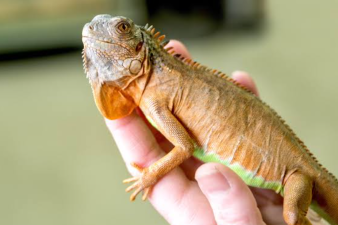
Today, pets have become important members of hundreds of millions of families worldwide. Whether it's a loyal dog, an elegant cat, a brightly colored parrot, or a lively rabbit, they not only accompany people in their daily lives but have also gradually become part of family culture. However, few people consider how these familiar pets originally entered human life. In fact, many of today's most popular pets have histories spanning thousands of years, once playing important roles in hunting, guarding, transportation, and even religious symbolism—a role quite different from that of modern family pets.
With the development of archaeology and ethology, the process of pet domestication has gradually been revealed. From ancient civilizations to modern cities, the relationship between humans and animals has continuously evolved, shaping today's rich and diverse pet culture. Understanding the history behind these pets not only allows us to cherish their companionship more but also helps us understand some of their enduring instincts and behaviors.
Dogs: Man's Earliest Companion
Dogs are generally considered one of the earliest animals domesticated by humans.
Research suggests that wolves began to gradually approach human settlements as early as 15,000 to 30,000 years ago. Some wolves with gentler temperaments were able to obtain food, while humans discovered their usefulness in guarding, hunting, and protecting camps. Through long-term coexistence, these wolves gradually evolved into the domestic dogs we know today.
Even after thousands of years of domestication, many dogs retain some ancestral instincts, such as chasing moving objects, exploring their environment by scent, and a strong sense of pack instinct.
Cats: Once revered as sacred animals by the ancient Egyptians
Cats entered human society slightly later than dogs, dating back approximately nine thousand years.
With the development of agriculture, grain storage attracted large numbers of rats, and wild cats, skilled at catching mice, began to appear near villages. People gradually realized that cats could help protect grain, thus forming a mutually beneficial relationship.
In ancient Egypt, cats were highly respected and even associated with the goddess Bastet. Harming a cat was considered a serious crime, and many cats were mummified after death, demonstrating their high status.
Goldfish: From ornamental fish to domestic pets
Goldfish originated in China and have a history of artificial breeding for over a thousand years.
Initially, people discovered that golden individuals occasionally appeared among wild crucian carp, leading to selective breeding. Through long-term cultivation, this gradually resulted in the diverse varieties of goldfish with their rich colors and sizes we see today.
Today, goldfish have become one of the world's most popular ornamental fish, found almost globally.
Rabbits: From Food Source to Companion Animals
Rabbits were not initially kept as pets, but rather as an important food source.
During the Middle Ages, rabbits were extensively bred in captivity. Later, people discovered that rabbits, with their docile temperament and moderate size, were suitable for family life.
With the continuous breeding of different breeds, more and more rabbits became family pets rather than farm animals.

Parrots: Favored by Nobility Centuries Ago
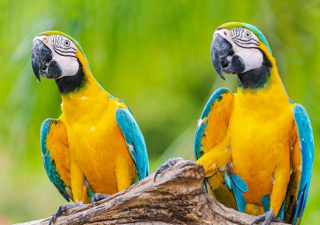
Parrots, with their vibrant plumage and ability to mimic sounds, became popular ornamental birds very early on.
In ancient Greece and Rome, people began keeping parrots from Asia and Africa. Later, with the development of maritime trade, more and more varieties entered Europe, becoming symbols of aristocratic status.
Even today, parrots remain very popular family pets worldwide.
Hamsters: Less Than a Century Old in Domestic Life
Compared to other pets, hamsters have a much shorter history.
Around 1930, scientists discovered wild golden hamsters in the Middle East and began captive breeding. Due to their small size, rapid reproduction, and ease of care, they quickly became common small pets in households worldwide.
Today, golden hamsters, dwarf hamsters, and Teddy hamsters are all very popular breeds.
Why are these animals pets?
Not all animals are suited to living with humans.
Animales that become pets typically possess the following characteristics:
- Relatively docile temperament, easily gaining trust with people.
- Adaptable to captive environments.
- Easy to meet dietary needs.
- Adaptable to living in groups or long-term coexistence with humans.
- Through long-term domestication, their aggression has significantly decreased.
These characteristics allow them to gradually integrate into human society and become family members.
Fun Facts about Pet History:
Dogs are one of the earliest known animals to be domesticated.
Ancient Egyptians held funeral rites specifically for cats.
Goldfish originally came in only a few colors; most modern breeds are the result of selective breeding.
Many dog breeds worldwide have been developed through artificial breeding in the last few centuries.
Hamsters have only been domestic pets for less than 100 years, much shorter than cats and dogs.
Conclusion
Today, we are accustomed to regarding pets as friends and family, but their ability to accompany humans has actually undergone a long evolution. From dogs that helped our ancestors hunt, to cats that guarded granaries, and later rabbits, goldfish, and parrots that became family members, each pet has a unique historical story. This history has not only shaped their behavior today but also forged a deep bond between humans and animals spanning thousands of years. Understanding the past of pets not only increases our knowledge of pet care but also helps us live with them in a more scientific and respectful way.